
Isle Royale Dispatch
- May 8
- 1 min read
Wisconsin moose are still (always) on my mind.
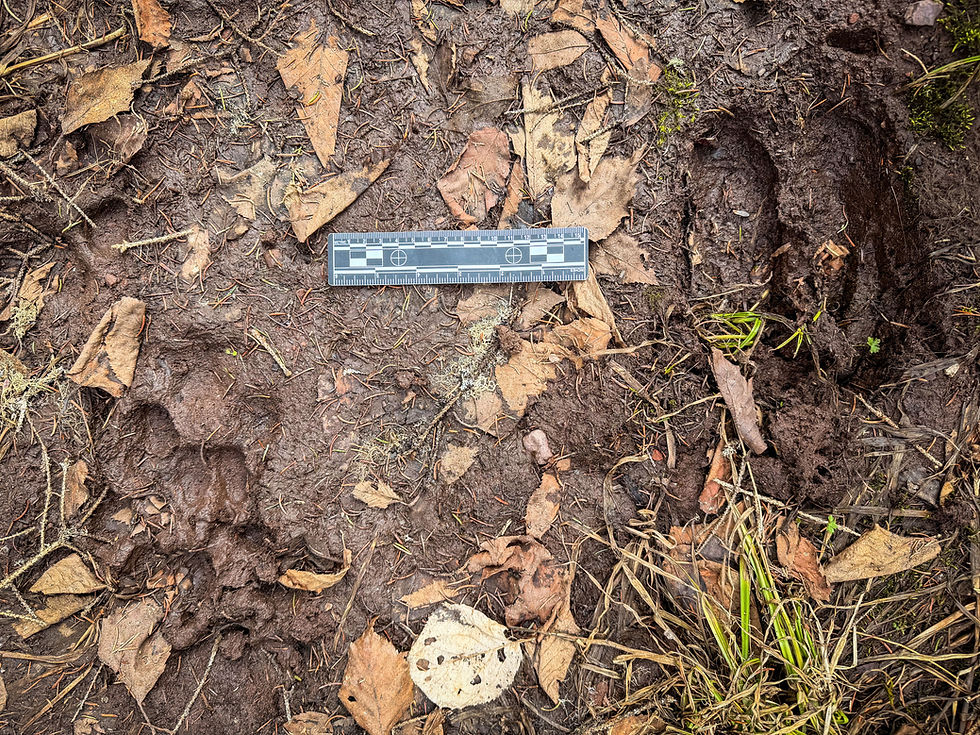
Moose here tend to appear less as sightings and more as evidence—browse lines in the understory, beds in thawing ground, the quiet signatures of movement through places most people pass without reading. You learn to see them in negative space as much as presence.
Tomorrow I head to Isle Royale with the Wolf-Moose Project leading a team as part of their Moosewatch program.
Moosewatch is a long-running, volunteer-supported effort contributing to one of the most continuous predator–prey datasets in North America. The work is intentionally unglamorous: observe, document, repeat. What it builds is not a snapshot, but continuity—an accumulated understanding of how moose condition, movement, and survival shift over time.
Roughly twenty volunteers make up Team 1, working across several groups. Alongside that are three additional field teams, plus a Moosewatch educators group that continues throughout the summer, all contributing to the shared work of translating what the landscape is doing in real time.
Isle Royale itself is often described in terms of balance, but it rarely feels balanced in practice. Wolves don’t arrive on schedule. Moose don’t behave like averages. Even winter ice—when it appears—does so on its own terms, briefly reshaping what is connected and what is isolated.
What emerges instead is something closer to ongoing negotiation: responsive, unstable, never fully resolved.
And in that sense, the island doesn’t feel separate so much as intensified—a place where the same ecological logic plays out, just with fewer buffers.
More when I return—after the wolves, moose, and weather have all had their say.
Until then.



Comments