
Isle Royale, Missing Moose, and Why May Matters
- Jun 2
- 2 min read
I recently returned from ten days on Isle Royale as part of the Wolf-Moose Project's Moosewatch program.
The trip covered roughly 98 miles of hiking through conditions that ranged from snow and cold rain to weather that seemed to remember, at the last minute, that it was supposed to be spring.
As always, Isle Royale was remarkable.
What made this visit different for me was the absence of something I normally hope to see.
For the first time on an Isle Royale trip, I did not see a moose (well, I did not see a live moose—small but important distinction).
I also didn't see a wolf, though that's less unusual. Wolves remain elusive, and I consider myself fortunate to have seen them at all on previous trips.
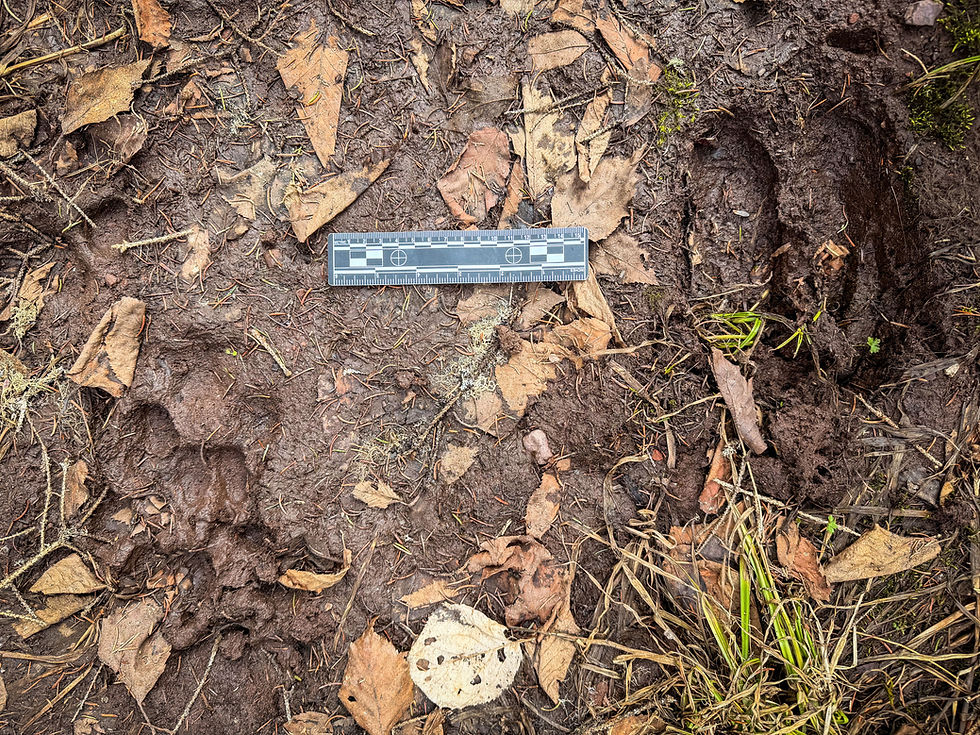
The lack of sightings, however, does not mean the island lacks a story.
According to recent Wolf-Moose Project findings, wolf numbers remain relatively strong while moose numbers continue to decline. Predation is certainly part of that story, but the ecological picture is much more complex than a simple increase in wolves causing a decrease in moose.
Researchers continue to observe nutritional stress in the moose population, while balsam fir regeneration has yet to show the response many hoped for following several years of reduced browsing pressure.
In other words, Isle Royale finds itself in a chapter unlike those that have come before it in the modern scientific record, at least as we understand it today.
One of the remarkable aspects of a study spanning more than six decades is that some questions take years, or even decades, to answer. The island remains one of the most important places in the world for understanding how predators, prey, vegetation, and climate interact over time.
Back in Wisconsin, May has provided a reminder that moose season isn't limited to autumn.
While September and October account for the highest number of observations each year, May consistently ranks among the most productive months for sightings.
Part of the reason is seasonal movement. Moose begin shifting toward wetlands and summer feeding areas as aquatic vegetation emerges. After a winter spent browsing woody plants, these nutrient-rich foods become increasingly important.
May is also the beginning of calving season.
As cows prepare to give birth, yearlings are pushed into independence and begin exploring the landscape on their own. These young animals can sometimes appear in unexpected places as they navigate their first season without their mothers.
For researchers, yearlings can provide especially valuable information. When documented, they offer evidence of successful reproduction and recruitment into the population.
So while autumn bulls often attract the most attention, spring observations can tell us some of the most important things about the future of Wisconsin's moose population.
And observations continue to come in—and they are always welcome.
Every report helps expand our understanding of a species that still exists just beyond the edge of certainty in Wisconsin.
For now, the cameras are waiting, the mosquitoes are organizing, and field season continues.


Comments