
Why You May Not Have Seen a Moose (Even If One Was Watching You)
- Dec 30, 2025
- 1 min read
Moose are enormous animals with legs like fence posts and antlers that look wildly impractical for stealth.
And yet.
They are astonishingly good at not being noticed.

Moose spend most of their time in places humans avoid: wetlands, bog edges, regenerating forests, and thick cover where visibility is measured in feet, not yards. They move slowly, deliberately, and often at dawn, dusk, or night. When they stop moving, they become forest furniture.
Add in dark fur, broken light, and a talent for standing perfectly still, and suddenly the largest land mammal in Wisconsin becomes… invisible.
Trail cameras catch them far more often than people do, and even then, they’re frequently half-hidden. A leg behind a spruce. A shoulder swallowed by alder. An eye reflecting light while the rest of the animal dissolves into shadow.

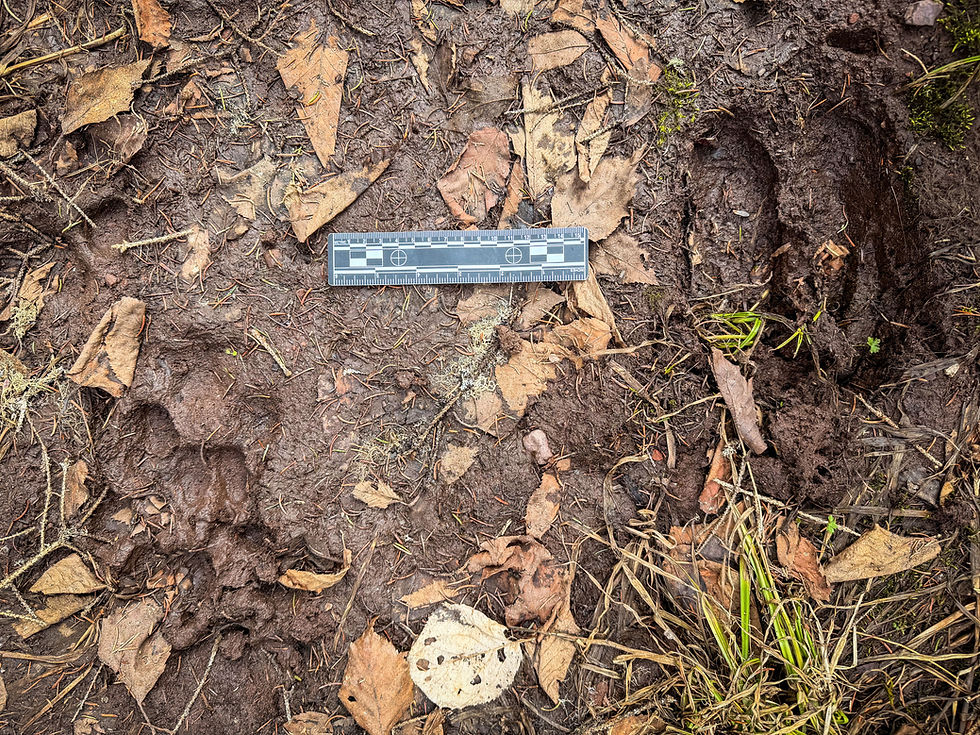
Moose also don’t travel in groups like deer. There’s no herd milling around to give them away. One moose can pass through an area, leave almost no trace, and be gone before anyone knows it was there.
This is why sightings feel mythical. Not because moose are rare by nature, but because they’re masters of timing, cover, and indifference to being observed.
If a moose walks through a marsh and no human sees it, does it still count?
Yes. The marsh knows.
Next up: What kind of animal can vanish this effectively—and how moose are built for a life spent half-hidden.


Comments